Over the weekend, I traveled to Northern Ireland with a few friends. Some may not be aware, that Northern Ireland is a separate country from the Republic of Ireland, and is actually apart of the UK. The division between the country goes back to politics throughout the 19th century, but I won't get into that....
On Friday afternoon we left the Galway bus station at about 6:00, and arrived in the town of Derry at about 11:30 PM. Derry, is one of the most Western cities in Northern Ireland and is on the boarder of Northern Ireland and the Republic of Ireland. We spent the night at the Paddy Palace Hostel. It was by far the coolest hostel I have ever been to. The staff were incredible friendly, and the people that we met there were awesome. We met people from Australia, South Africa, London, New Zealand, U.S., Canada, Germany, Poland, and many other countries just to name a few!
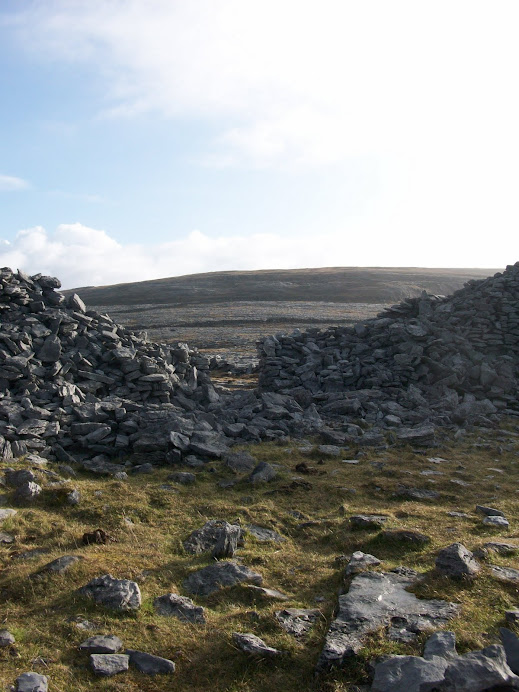
On Saturday morning the "Paddy Wagon" picked us up and began our tour for the day. The first stop was in Donegal (the most northern county in the Repuclic of Ireland). We drove up in to the hills, and saw some of the most breathtaking views I have ever witnessed. We got to climb up a stone fort castle that was built by the O'Neil famly, around the time of Christ, and witnessed a panoramic view of the hills of Donegal as well as the inlet.
Afterward, we began heading down the hills and back into Northern Ireland. We drove along the coastline, which was absolutely incredible, to say the least. We drove past a castle that was built in the 13th century, that was literally falling off the cliffs of the coast, and some of it had already fallen into the ocean. I'm kicking myself because I can't remember the name of it!!
Then it was on to the Giants Causeway. The Giants Causeway is known as the "8th wonder of the world".... even though there are only seven. It was formed over 60 million years ago after a volcanic eruption. This is what wikipedia says about it.... "Some 50 to 60 million years ago,[3]Paleogene period, Antrim was subject to intense volcanic activity, when highly fluid molten basalt intruded through chalk beds to form an extensive lava plateau. As the lava cooled rapidly, contraction occurred. While contraction in the vertical direction reduced the flow thickness (without fracturing), horizontal contraction could only be accommodated by cracking throughout the flow. The size of the columns is primarily determined by the speed at which lava from a volcanic eruption cools[4]. The extensive fracture network produced the distinctive columns seen today. The basalts were originally part of a great volcanic plateau called the Thulean Plateau which formed during the Paleogene period.[5] "
We ended up hiking around the Giants Causeway and the national park for a few hours throughout the afternoon. The rock formations were incredible, and it was amazing how they all resembled the same hexagon tower shape. A similar rock formation is seen in Scotland as well.
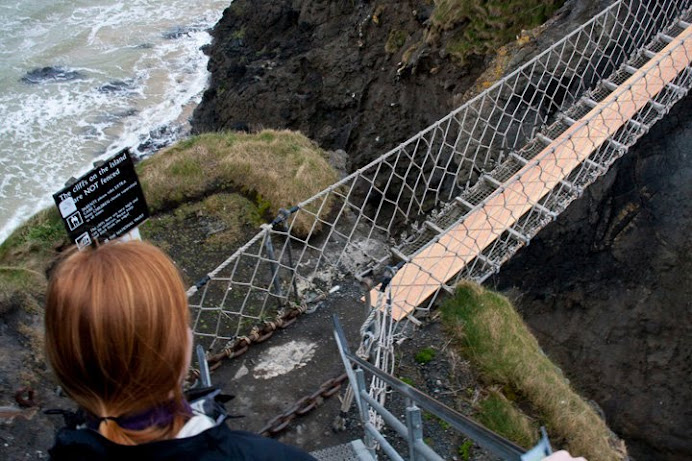
After we hiked the Causeway, we went to another Ireland National Trust Site called the Carrack-a-Rede Rope Bridge. We hiked out to the Rope Bridge, and were able to cross it to the small island. The bridge was about 6 stories above the water- little scary!!!! Once we reached the island, we were able to hike around it, and we could even see Scotland! (so technically I have "seen" Scotland... well that's one more item off of the bucket list!
After the bridge, it was on to Belfast. We only saw Belfast for a few hours, but the coolest part was this bar that was built in 1851. When the Italians were emigrating to Northern Ireland and building churches, the owner of the bar asked the builders if after work they could come build his bar in return for free alcohol for the rest of their lives, and well... they agreed. The bar has the detail and architecture of beautiful European Church. There is stainglass, and amazing woodwork throughout the entire bar. We only spent a few hours in Belfast, but what I saw of the city, I really enjoyed. That night, we took the city bus back to the city of Derry, which was only about an hour and a half drive.
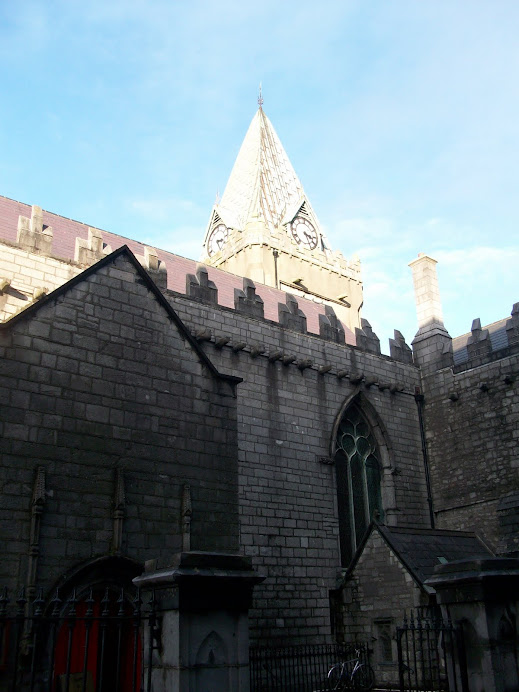
On Sunday we explored the town of Derry. Derry is known as the "wall city". In the 1600's, they built these extensive walls around the city as a way of defense. The walls are about 6 meters high (a little over 18ft) and still have the cannon holes, original defenses, and are incredibly preserved. I was also able to see the cathedral that inspired John Newton to write the song amazing grace. Later In the afternoon, we were in the city center, and couldn't figure out what all the noise was, and realized they were filming a movie for the BBC channel, so we were able to watch a portion of that as well. We boarded the bus late in the afternoon, and headed back to Galway. This time it was daylight as we drove through County Donegal and County Sligo, and the views made the 5.5 hour drive go incredibly fast! I can easily say that this was my favorite trip so far, although I have sincerely enjoyed all my experiences on this trip.
I have posted pictures below :)
during the
Sunday, March 28, 2010

Wednesday, March 24, 2010
Youth Services Galway
Of the course of this trip I have spent a number of hours volunteering my time at Youth Services Galway, so I thought I would write a little bit about it. It's a free program after schools for under privileged children in the Galway area. Most of the kids come from the caravans of the area, which are the equivalent to trailer parks in the United States.
Usually they come to the community center directly after school for 2-3 hours, and we greet them with a snack. The we help them with their homework for about 45 minutes and then have snack time. I'm pretty good at helping them with their subjects except for Irish. It's funny because the kids always get the biggest kick out of things I say... for instance, I complemented a girl on her Hannah Montana backpack. She looked at me funny and then started giggling... I was a little confused and then she explained to me that it's called a school bag. They are always curious about what we call things in the states, and think that "recess" is the coolest word they've ever heard.
After homework and snack we usually do a craft...today we made Easter cards, they even made me one! Then it's usually on to the gym to run off some energy. We ended up playing basketball today. Overall it's been a great experience, it's kind of sad to know the backgrounds they come from, but as the same time I really enjoy helping them after school. Some days they are a little wild and other days they are super sweet, but it keeps it exciting I guess.
Usually they come to the community center directly after school for 2-3 hours, and we greet them with a snack. The we help them with their homework for about 45 minutes and then have snack time. I'm pretty good at helping them with their subjects except for Irish. It's funny because the kids always get the biggest kick out of things I say... for instance, I complemented a girl on her Hannah Montana backpack. She looked at me funny and then started giggling... I was a little confused and then she explained to me that it's called a school bag. They are always curious about what we call things in the states, and think that "recess" is the coolest word they've ever heard.
After homework and snack we usually do a craft...today we made Easter cards, they even made me one! Then it's usually on to the gym to run off some energy. We ended up playing basketball today. Overall it's been a great experience, it's kind of sad to know the backgrounds they come from, but as the same time I really enjoy helping them after school. Some days they are a little wild and other days they are super sweet, but it keeps it exciting I guess.
Friday, March 19, 2010
St. Paddy's and Pete!
As most of you know Wednesday was St. Paddy's Day.... and well it's nothing short of madness here in Ireland. I went to the parade with friends in the morning, and the parade lasted almost 2 hours. In Ireland, St. Patrick's Day is a national holiday, so all of the kids were out of school. The parade was absolutely packed, and included a bunch of songs and dances by numerous ethnic groups, a few floats, a lot of marching bands, and a few other acts. The city was dressed in green!
Although I didn't get to experience the pubs on St. Patrick's day something better happened! I got a call about 7:30 on Wednesday night from my mom saying that Pete (my brother in law who is the army) would be stopping over in Shannon, Ireland on his way back to Iraq at about 5:00am. He was returning from 2 weeks of R&R. So I was able to get on the last bus out of town at 10:00 PM that night, pulled an all nighter at the airport and was able to see Pete.
But there is more to this story.... Unfortunately on the way to the airport, my wallet was lost, and so I was without identification.... kind of a problem at the airport! Thankfully, I was able to call my parents back in the states and they were able to fax over a copy of my passport to the airport police, and then I got to be escorted by airport police until I met up with Pete. Kind of a crazy day, but definitely worth it! I got to spend about an hour with Pete at the airport before he had to get on his next plane. I got home about 10:30am on Thursday, napped for a few hours and then was off to class. I slept like a baby last night :)
One week left of classes..... this trip is going so ridiculously fast!
Although I didn't get to experience the pubs on St. Patrick's day something better happened! I got a call about 7:30 on Wednesday night from my mom saying that Pete (my brother in law who is the army) would be stopping over in Shannon, Ireland on his way back to Iraq at about 5:00am. He was returning from 2 weeks of R&R. So I was able to get on the last bus out of town at 10:00 PM that night, pulled an all nighter at the airport and was able to see Pete.
But there is more to this story.... Unfortunately on the way to the airport, my wallet was lost, and so I was without identification.... kind of a problem at the airport! Thankfully, I was able to call my parents back in the states and they were able to fax over a copy of my passport to the airport police, and then I got to be escorted by airport police until I met up with Pete. Kind of a crazy day, but definitely worth it! I got to spend about an hour with Pete at the airport before he had to get on his next plane. I got home about 10:30am on Thursday, napped for a few hours and then was off to class. I slept like a baby last night :)
One week left of classes..... this trip is going so ridiculously fast!
Thursday, March 11, 2010
Connemara
My friend Emily (who has been one of my closest friends since 5th grade) came to visit this week. Earlier in the week we went to Connemara for the day. Connemara is just north of Galway. It contains many villages that were severely impacted by the Great Famine in Ireland. (If you don't know what the Famine was, read my paper posted below on it and it might give you a greater understanding)
We headed up the coastal road on our tour bus and the sites were gorgeous. We drove through numerous villages that still have thatched roofs, and small cottages. There are many lakes when you drive through the Connemara region as well as fishing towns. The big stop of the day was at Kylemore Abbey. It's a castle that was built back in the 1850's by the Henry's. When Mr. Henry's wife died back in the early 20th century they sold the castle to a series of nuns. Emily and I were quite proud to be there because we were putting our Forest Ridge educations to use since we were taught by nuns back in middle school. On the grounds are the original castles, the gothic church, and beautiful gardens. When my parents come visit next month we are going to visit there again, and I can't wait to see the gardens when they are bloomed.
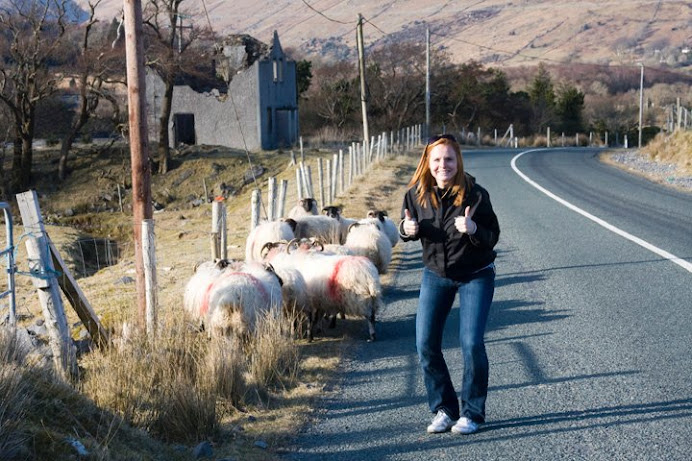
After the Abbey we continued our drive for the reason and got to see the only Fjord in Ireland, which was absolutely beautiful. The drive home was funny because we got to witness our first irish traffic jam.... Sheep were in the middle of the street and the bus couldn't go anywhere for awhile! Overall it was a gorgeous day, complete sunshine too! I have posted pictures below for you to check out as well.
We headed up the coastal road on our tour bus and the sites were gorgeous. We drove through numerous villages that still have thatched roofs, and small cottages. There are many lakes when you drive through the Connemara region as well as fishing towns. The big stop of the day was at Kylemore Abbey. It's a castle that was built back in the 1850's by the Henry's. When Mr. Henry's wife died back in the early 20th century they sold the castle to a series of nuns. Emily and I were quite proud to be there because we were putting our Forest Ridge educations to use since we were taught by nuns back in middle school. On the grounds are the original castles, the gothic church, and beautiful gardens. When my parents come visit next month we are going to visit there again, and I can't wait to see the gardens when they are bloomed.
After the Abbey we continued our drive for the reason and got to see the only Fjord in Ireland, which was absolutely beautiful. The drive home was funny because we got to witness our first irish traffic jam.... Sheep were in the middle of the street and the bus couldn't go anywhere for awhile! Overall it was a gorgeous day, complete sunshine too! I have posted pictures below for you to check out as well.
Saturday, March 6, 2010
Why Lauren is qualified to now teach a birthing class...
I never thought I would be so thankful that I knew how to swim until today. So thank you mom and dad for those years of commitment to swim lessons and weekends spent and swim team. So you might wonder where I'm going with this.... well yes it's another tale of the kayak club.
As I put my freezing cold wetsuit on this morning I though nothing of it. Before I knew it we carried our kayaks over to this side stream, passed them down a short cliff, the hiked down to the base of the stream. This was one of the first times I had ever done rapids in a kayak, but I thought I could handle it. We head down stream and stop about 100 yards before a short waterfall. I'm pretty stoked at this point because I have gone of bridges so this really couldn't be that bad right?!
We start heading down stream and we are supposed to keep 2 boats lengths infront of us. This guy was ahead of me who looked like was going to die.... probably the same expression I had the first time I went off the bridge. Everyone was trying to get his confidence up, and of course I ended up behind him. We were instructed to stay left because there was a large rock on the right. So what does he do.... He goes right... Of course! His boat is now stuck infront of me going perpendicular to the rapids and blocking the entire width of the stream. I can't stop because we are in rapids, so I turn my boat to the side so that I can dock up against him and push him off. He is so scared that he grabs my boat so fiercely that mine flips into the rapids. He is even more distraught.... My boat fills with so much water that it sinks and then reemerges and floats down stream with my paddle. We had a guide 300 yards down stream making sure everyone came out of the waterfall okay so he was able to get my boat. I was able to send the guy who was freaking out over the waterfall, but here I am boatless with one other guide.
We hike off to the side and he give me two options. We can either hike down the street to get our boats and swim. Ummm let me think... I'm not swimming down at 40 degree river with rapids... i think not. So we begin to hike and come upon a house. On one side it boarders the river, on the other side it boarders the stream, there was no way around it. About 3 feet up was a small step, we climbed up and realized we were on the roof of a house. Walked to then end and realized it was about a 15 foot jump to the ground. Well- guess that means we are going for a swim. So I climb down the side, and the next thing I know I'm in the river. Oh, by the way- did I mention by this time there were atleast 50 people on the ridge watching this whole episode. By the time it was over it seemed like there were 100 people.
We start floating down the river to the group. I tried not to go into shock with the temperature of the water so I tried to take my mind off of it. So I started doing deep breathing...hahaha I felt like I was in a birthing class...heck I could probably teach one after those breathing skills! About 200-300 yards later we finally catch up with our group and the boats. By this time I'm pretty sure everyone on the ridge watching this episode has taken a picture, but I decided I'm totally cool with that- may I will see myself on the cover of the next "outdoor explorers magazine"?! who knows. Or maybe they were paparazzi?!
So I finally get in my boat and we kayak the rest of the rapids, and I make sure I stay in front of the guy who was deathly afraid of the rapids. We get to the end of the river, and then got to carry our kayaks back to the shed. 15 minutes with a kayak on your back...awesomeness... you get some really weird looks, oddly, no one wanted to take my picture then, so maybe I will just stick with swimming?
I wish I had pictures to illustrate this adventure, but don't worry, just pick up a tabloid and maybe I will be on the cover?! Who knows?
As I put my freezing cold wetsuit on this morning I though nothing of it. Before I knew it we carried our kayaks over to this side stream, passed them down a short cliff, the hiked down to the base of the stream. This was one of the first times I had ever done rapids in a kayak, but I thought I could handle it. We head down stream and stop about 100 yards before a short waterfall. I'm pretty stoked at this point because I have gone of bridges so this really couldn't be that bad right?!
We start heading down stream and we are supposed to keep 2 boats lengths infront of us. This guy was ahead of me who looked like was going to die.... probably the same expression I had the first time I went off the bridge. Everyone was trying to get his confidence up, and of course I ended up behind him. We were instructed to stay left because there was a large rock on the right. So what does he do.... He goes right... Of course! His boat is now stuck infront of me going perpendicular to the rapids and blocking the entire width of the stream. I can't stop because we are in rapids, so I turn my boat to the side so that I can dock up against him and push him off. He is so scared that he grabs my boat so fiercely that mine flips into the rapids. He is even more distraught.... My boat fills with so much water that it sinks and then reemerges and floats down stream with my paddle. We had a guide 300 yards down stream making sure everyone came out of the waterfall okay so he was able to get my boat. I was able to send the guy who was freaking out over the waterfall, but here I am boatless with one other guide.
We hike off to the side and he give me two options. We can either hike down the street to get our boats and swim. Ummm let me think... I'm not swimming down at 40 degree river with rapids... i think not. So we begin to hike and come upon a house. On one side it boarders the river, on the other side it boarders the stream, there was no way around it. About 3 feet up was a small step, we climbed up and realized we were on the roof of a house. Walked to then end and realized it was about a 15 foot jump to the ground. Well- guess that means we are going for a swim. So I climb down the side, and the next thing I know I'm in the river. Oh, by the way- did I mention by this time there were atleast 50 people on the ridge watching this whole episode. By the time it was over it seemed like there were 100 people.
We start floating down the river to the group. I tried not to go into shock with the temperature of the water so I tried to take my mind off of it. So I started doing deep breathing...hahaha I felt like I was in a birthing class...heck I could probably teach one after those breathing skills! About 200-300 yards later we finally catch up with our group and the boats. By this time I'm pretty sure everyone on the ridge watching this episode has taken a picture, but I decided I'm totally cool with that- may I will see myself on the cover of the next "outdoor explorers magazine"?! who knows. Or maybe they were paparazzi?!
So I finally get in my boat and we kayak the rest of the rapids, and I make sure I stay in front of the guy who was deathly afraid of the rapids. We get to the end of the river, and then got to carry our kayaks back to the shed. 15 minutes with a kayak on your back...awesomeness... you get some really weird looks, oddly, no one wanted to take my picture then, so maybe I will just stick with swimming?
I wish I had pictures to illustrate this adventure, but don't worry, just pick up a tabloid and maybe I will be on the cover?! Who knows?
Sunday, February 28, 2010
Things are picking up
At first this whole thing felt like a vacation. I had so much time on my hands to do whatever around town, but things are picking up. This whole trip is going so fast I feel like I'm going to blink and I will be home for summer.
I had my first midterm essay due this week (that I posted on Monday) and I have another essay due early next week. I have been working on it all weekend because my friend Emily comes a week from today, and I want to be done with my midterm by then! This one is easier because it's for my Rise of Modern America class, so I am much more familiar with the topics.
I had class all week as usual, and started a new job at Kelly's Bar. It's nothing to glamorous- I stand outside and promote the bar. It's been ridiculously cold out though, so it's not making work too fun at all.
Yesterday I went down to the Saturday market. I absolutely love going every week and getting my produce from there. There are so many different stands.... crepes, fallafel's, sushi, produce, bagels, jewelry, chess stands, olive stands, bakeries, artists, jams, fish, flowers, home made gadgets and much more. It's so fun to walk downtown on Saturday mornings and see all of this. I would post pictures.... but my camera is still dead. Emily is bringing my charger so I will definitely have pictures soon :)
I had my first midterm essay due this week (that I posted on Monday) and I have another essay due early next week. I have been working on it all weekend because my friend Emily comes a week from today, and I want to be done with my midterm by then! This one is easier because it's for my Rise of Modern America class, so I am much more familiar with the topics.
I had class all week as usual, and started a new job at Kelly's Bar. It's nothing to glamorous- I stand outside and promote the bar. It's been ridiculously cold out though, so it's not making work too fun at all.
Yesterday I went down to the Saturday market. I absolutely love going every week and getting my produce from there. There are so many different stands.... crepes, fallafel's, sushi, produce, bagels, jewelry, chess stands, olive stands, bakeries, artists, jams, fish, flowers, home made gadgets and much more. It's so fun to walk downtown on Saturday mornings and see all of this. I would post pictures.... but my camera is still dead. Emily is bringing my charger so I will definitely have pictures soon :)
Monday, February 22, 2010
19 Century Ireland Midterm Paper
So I finished my first midterm paper so I thought I would let you all read what I have learned about the Irish famine so far. Sorry if it's boring!
The prompt was: Evaluate the role and policies of the British government during the Great Famine of 1845-1850
Here is my proof that I actually do school work here :)
As the eve of the 1845 famine descended on the Irish people, no one could predict the severity. The Irish had suffered through a previous famine in 1821, but the length of the impending famine was unforeseen. With 45% of its population dependent on the potato, it would be easy to predict what might occur when the potato crop was lost. Throughout the Great Irish Famine of 1845-1850 the British government failed to make great strides in the improvement of the Irish economy and food aid, but they were not completely to blame. Extreme weather, environmental factors, and disease also contributed to the severity of the devastating famine.
Throughout the 1830s, the British government had control over the land of Ireland. In the early 1840s, the poverty levels began to rise throughout the Irish countryside, and a problematic trend in Irish society was noted: The Irish were subdividing their land, which decreased the rate at which one could provide food to their family and make a living. The increased the demands on the land, led to problems before the start of the famine. Other issues of the time included the fact that the landlords were living beyond their means, agrarian violence was on the rise, and the rate at which tenants were being evicting was increasing. The British believed that the Irish landlords were hard to manage, but when the famine occurred, they began to look towards the landlords for assistance. With a poor communication system between the British government and the Irish landlords, this set the foundation for many problems that arose between the two countries during the famine.
The famine emerged in 1845 when Blight, a disease that caused the death of a third of the potato crop that year, began to appear. With 45% of the Irish citizens dependent on this nutrient crop, it provided the foundation for a drastic downturn in the Irish population. As the British government began to learn of the Irish Famine, they believed that it was exaggerated and would be short-lived. With the lack of photography during the era, all they had were sketches to help them understand the extent of the famine. Although they carried a laissez-faire attitude, this was seen as an “aspiration rather than a reality”. However, Sir Robert Peel, the British Prime Minister in 1845, did not adopt this same idea. He secretly purchased Indian meal from the United States to attempt to feed the suffering Irish people. He also attempted to create a scientific commission to try to dry out the potatoes or use diseased potatoes to create a starch. Although no solution was discovered, these efforts revealed Peel’s concern for Ireland during the famine.
During Sir Robert Peel’s administration, Charles Trevelyan also played a prominent role in the British political influence on Ireland. Trevelyan promoted the Laissez-Faire attitude, and was adamant about the British government not intervening in Ireland’s marketplace. He believed that people should work for aid, and that it should not be given to the people in the form of food. He also felt that all efforts must benefit the society rather than the individuals. He attempted to collect funds from Irish citizens, but poorer communities were unable to produce sufficient funds, which meant that those who needed the most aid were not able to receive it. To continue with his economic ideas, he oversaw all relief efforts and controlled the Board of Works. Over 5,800 people were employed to build roads around Ireland. Although this idea implemented Trevelyan’s notion that people must work for their food, it became contradictory because he attempted to lower the wages to keep people out of work and also implemented “task work”. Task work meant that people were paid in an amount proportional to the amount of work they did. People were paid much less than they expected to be paid because they did not have the energy to produce sufficient work because they were not able to feed themselves before long laboring days. Although Sir Robert Peel and Trevelyan made strides attempting to correct the famine, they were not enough to provide sufficient relief to Ireland. By then end of 1846 the Conservative Party began to split, and Peel’s administration failed.
In addition to the help coming from Britain, Daniel O’Connell, an Irish politician, also attempted to correct the famine because he was living through it. From 1845 through June of 1846, O’Connell focused on political issues rather than directly on the potato famine. He began to form a strong relationship with the Whigs and began to reunite the followers within the Repeal movement. He believed that if he waited for the Whigs to return to power, they may provide more relief, which caused a split in the Repeal Movement. However, support for O’Connell began to dissipate because he was not providing any immediate relief to the Irish people. As the Young Irelanders emerged they became very critical about O’Connell, which forced O’Connell to denounce them, which lead to a greater split in the Repeal Movement.
In June of 1846, O’Connell succeeded. The Whigs came into power, and replaced Sir Robert Peel’s administration with the administration of Sir John Russell. Russell’s administration was interested in continuing relief efforts and felt as though the famine would begin to improve. However, environmental factors out of their control led to the worsening of the famine. During the summer of 1846 Ireland received 11 inches of rain, which caused the complete loss of the potato crop. Four million people now relied on relief, and with no immediate change to government policy, it seemed that the people of Ireland were doomed. Russell’s administration also failed to make advances with the Board of Works, which led to internal power struggles and a hollow government.
Although there were failures in both the Peel and Russell administrations, this does not mean that these parties did not attempt to correct the famine. With potato crisis also occurring in Scotland at the same time as the famine in Ireland, it seemed as though Scotland was receiving more aid and attention because they had been integrated for a longer period of time. The British lacked aid to Ireland, but in retrospect, there were many coalitions formed to fight the famine. The problem was that they did not exist at the strength Ireland needed to rise from the famine. Although relief organizations such as the Board of Works paid their employees in cash, there was no available food to purchase, and they were paid irregularly.. Many landlords had mortgaged their estates before the famine, which caused up to a quarter to become bankrupt during the famine. Other organizations such as the Society of Friends were established to help feed masses of people. These helped reduce diarrhea and dysentery, but the working class was not entitled to them even though their wages were not sufficient enough to feed them. Following the Society of Friends, the Soup Kitchen Act emerged in 1847. Soup Kitchens were established in all Poor Law Unions, and were a major factor in combating the crisis. Another relief effort was the British Relief Association, which was a small private organization that attempted to provide food and aid, but it ultimately failed because it was unable to provide for large groups. Finally, the Poor Law attempted to provide work for those in the worst conditions. They provided work houses and rations, but as the famine worsened the rations in the work houses were eventually cut in half, creating poor working conditions.
In retrospect, the British politicians during the famine did attempt to create relief for the people of Ireland, but they were not able to do so in numbers large enough to benefit an entire country. The fact that the famine was seen as exaggerated and the fact that the era lacked photographical evidence may provide reasoning for the smaller attempts to relieve the starving Irish. Scotland was also experiencing a similar crisis due to the same potato-killing disease, which also contributed to the lack of support from the British government. The lack of communication between the British politicians and the Irish people was a major factor in the increasing poverty levels that led to the severity of the famine by the late 1840s. Other contributing factors included the significant drought that led to the destruction of the entire crop in 1846, and the spread of Blight. Overall, the lack of support from the British government and the unforeseen environmental factors led to the devastation caused by the Great Irish Famine. Although it was a decade of devastation, the Irish did not have time to point fingers, they had to focus on what to do next. Whether this caused the Irish people to emigrate or to rebuild their lives, they carried on with pride of their Irish roots, but the famine was never to be forgotten.
The prompt was: Evaluate the role and policies of the British government during the Great Famine of 1845-1850
Here is my proof that I actually do school work here :)
As the eve of the 1845 famine descended on the Irish people, no one could predict the severity. The Irish had suffered through a previous famine in 1821, but the length of the impending famine was unforeseen. With 45% of its population dependent on the potato, it would be easy to predict what might occur when the potato crop was lost. Throughout the Great Irish Famine of 1845-1850 the British government failed to make great strides in the improvement of the Irish economy and food aid, but they were not completely to blame. Extreme weather, environmental factors, and disease also contributed to the severity of the devastating famine.
Throughout the 1830s, the British government had control over the land of Ireland. In the early 1840s, the poverty levels began to rise throughout the Irish countryside, and a problematic trend in Irish society was noted: The Irish were subdividing their land, which decreased the rate at which one could provide food to their family and make a living. The increased the demands on the land, led to problems before the start of the famine. Other issues of the time included the fact that the landlords were living beyond their means, agrarian violence was on the rise, and the rate at which tenants were being evicting was increasing. The British believed that the Irish landlords were hard to manage, but when the famine occurred, they began to look towards the landlords for assistance. With a poor communication system between the British government and the Irish landlords, this set the foundation for many problems that arose between the two countries during the famine.
The famine emerged in 1845 when Blight, a disease that caused the death of a third of the potato crop that year, began to appear. With 45% of the Irish citizens dependent on this nutrient crop, it provided the foundation for a drastic downturn in the Irish population. As the British government began to learn of the Irish Famine, they believed that it was exaggerated and would be short-lived. With the lack of photography during the era, all they had were sketches to help them understand the extent of the famine. Although they carried a laissez-faire attitude, this was seen as an “aspiration rather than a reality”. However, Sir Robert Peel, the British Prime Minister in 1845, did not adopt this same idea. He secretly purchased Indian meal from the United States to attempt to feed the suffering Irish people. He also attempted to create a scientific commission to try to dry out the potatoes or use diseased potatoes to create a starch. Although no solution was discovered, these efforts revealed Peel’s concern for Ireland during the famine.
During Sir Robert Peel’s administration, Charles Trevelyan also played a prominent role in the British political influence on Ireland. Trevelyan promoted the Laissez-Faire attitude, and was adamant about the British government not intervening in Ireland’s marketplace. He believed that people should work for aid, and that it should not be given to the people in the form of food. He also felt that all efforts must benefit the society rather than the individuals. He attempted to collect funds from Irish citizens, but poorer communities were unable to produce sufficient funds, which meant that those who needed the most aid were not able to receive it. To continue with his economic ideas, he oversaw all relief efforts and controlled the Board of Works. Over 5,800 people were employed to build roads around Ireland. Although this idea implemented Trevelyan’s notion that people must work for their food, it became contradictory because he attempted to lower the wages to keep people out of work and also implemented “task work”. Task work meant that people were paid in an amount proportional to the amount of work they did. People were paid much less than they expected to be paid because they did not have the energy to produce sufficient work because they were not able to feed themselves before long laboring days. Although Sir Robert Peel and Trevelyan made strides attempting to correct the famine, they were not enough to provide sufficient relief to Ireland. By then end of 1846 the Conservative Party began to split, and Peel’s administration failed.
In addition to the help coming from Britain, Daniel O’Connell, an Irish politician, also attempted to correct the famine because he was living through it. From 1845 through June of 1846, O’Connell focused on political issues rather than directly on the potato famine. He began to form a strong relationship with the Whigs and began to reunite the followers within the Repeal movement. He believed that if he waited for the Whigs to return to power, they may provide more relief, which caused a split in the Repeal Movement. However, support for O’Connell began to dissipate because he was not providing any immediate relief to the Irish people. As the Young Irelanders emerged they became very critical about O’Connell, which forced O’Connell to denounce them, which lead to a greater split in the Repeal Movement.
In June of 1846, O’Connell succeeded. The Whigs came into power, and replaced Sir Robert Peel’s administration with the administration of Sir John Russell. Russell’s administration was interested in continuing relief efforts and felt as though the famine would begin to improve. However, environmental factors out of their control led to the worsening of the famine. During the summer of 1846 Ireland received 11 inches of rain, which caused the complete loss of the potato crop. Four million people now relied on relief, and with no immediate change to government policy, it seemed that the people of Ireland were doomed. Russell’s administration also failed to make advances with the Board of Works, which led to internal power struggles and a hollow government.
Although there were failures in both the Peel and Russell administrations, this does not mean that these parties did not attempt to correct the famine. With potato crisis also occurring in Scotland at the same time as the famine in Ireland, it seemed as though Scotland was receiving more aid and attention because they had been integrated for a longer period of time. The British lacked aid to Ireland, but in retrospect, there were many coalitions formed to fight the famine. The problem was that they did not exist at the strength Ireland needed to rise from the famine. Although relief organizations such as the Board of Works paid their employees in cash, there was no available food to purchase, and they were paid irregularly.. Many landlords had mortgaged their estates before the famine, which caused up to a quarter to become bankrupt during the famine. Other organizations such as the Society of Friends were established to help feed masses of people. These helped reduce diarrhea and dysentery, but the working class was not entitled to them even though their wages were not sufficient enough to feed them. Following the Society of Friends, the Soup Kitchen Act emerged in 1847. Soup Kitchens were established in all Poor Law Unions, and were a major factor in combating the crisis. Another relief effort was the British Relief Association, which was a small private organization that attempted to provide food and aid, but it ultimately failed because it was unable to provide for large groups. Finally, the Poor Law attempted to provide work for those in the worst conditions. They provided work houses and rations, but as the famine worsened the rations in the work houses were eventually cut in half, creating poor working conditions.
In retrospect, the British politicians during the famine did attempt to create relief for the people of Ireland, but they were not able to do so in numbers large enough to benefit an entire country. The fact that the famine was seen as exaggerated and the fact that the era lacked photographical evidence may provide reasoning for the smaller attempts to relieve the starving Irish. Scotland was also experiencing a similar crisis due to the same potato-killing disease, which also contributed to the lack of support from the British government. The lack of communication between the British politicians and the Irish people was a major factor in the increasing poverty levels that led to the severity of the famine by the late 1840s. Other contributing factors included the significant drought that led to the destruction of the entire crop in 1846, and the spread of Blight. Overall, the lack of support from the British government and the unforeseen environmental factors led to the devastation caused by the Great Irish Famine. Although it was a decade of devastation, the Irish did not have time to point fingers, they had to focus on what to do next. Whether this caused the Irish people to emigrate or to rebuild their lives, they carried on with pride of their Irish roots, but the famine was never to be forgotten.
Subscribe to:
Posts (Atom)